


Surgical Critical Care Fellowship
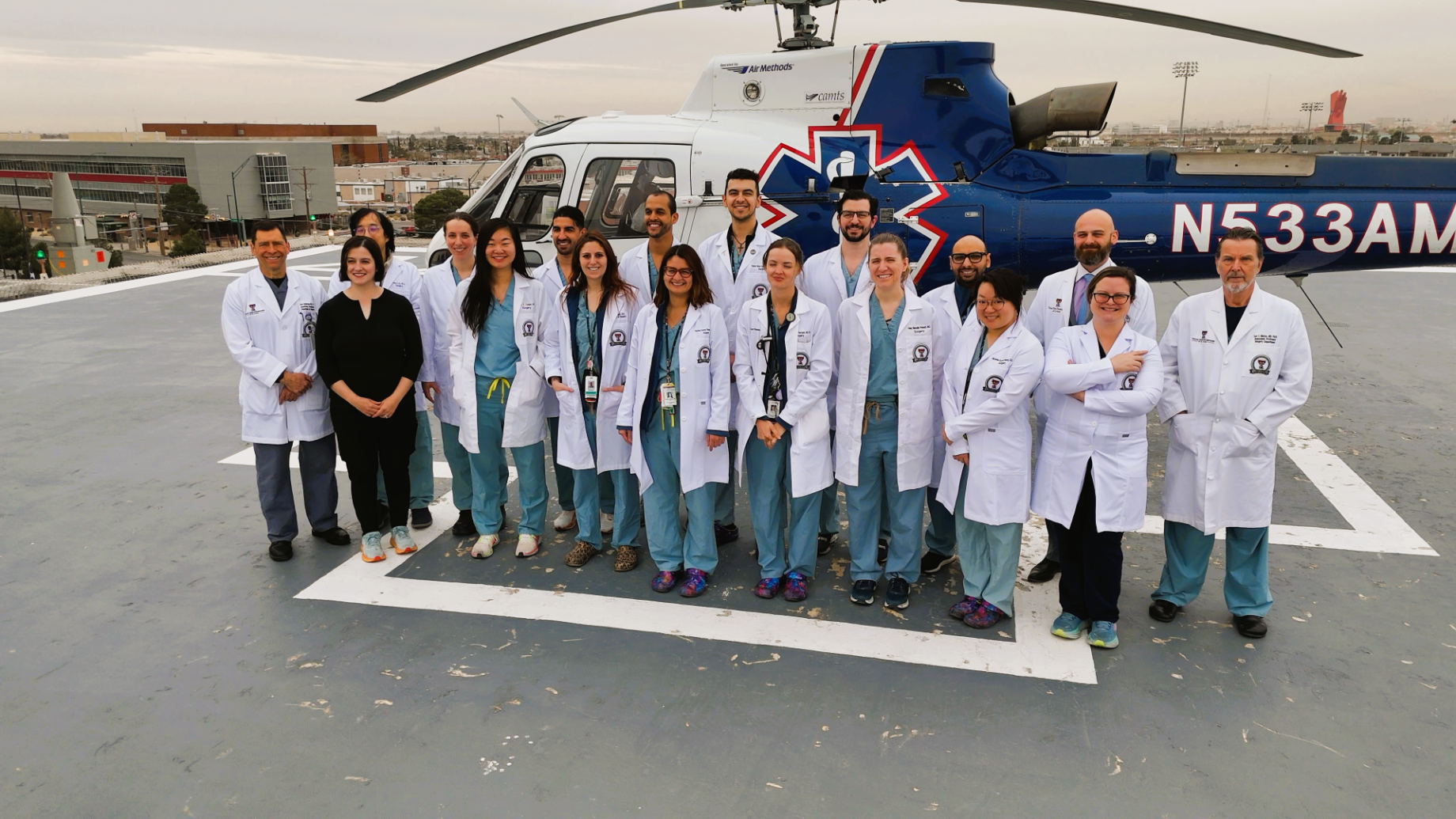
The Surgical Critical Care Fellowship at Texas Tech University Health Sciences Center El Paso prepares surgical intensivists to provide excellent and timely surgical critical care; resuscitate and provide excellent trauma critical care; review data and disseminate research findings; teach residents and students; and lead a critical care unit.
Within one year of program matriculation, the surgical critical care fellow will gain substantive knowledge in surgical critical care to pass the surgical critical care certifying exam. The fellow will gain knowledge to practice in a surgical intensive care unit and care for trauma patients. The fellow will learn research skills, including how to formulate a research question, gather and analyze data, write and submit a clinical scientific abstract to a meeting, and prepare and disseminate a one-hour continuing medical education talk. After one year, the graduating fellow will be prepared for employment as a surgical critical care attending and prepared to publish a scientific manuscript in a medical or surgical journal.
The program includes eight months in the Surgical/Trauma ICU, and two months dedicated to daytime Trauma and Emergency General Surgery. In addition, fellows rotate through a variety of selective services, including Pediatric ICU, Cardiovascular ICU, and Neurosciences ICU. A structured didactic curriculum supports learning through both asynchronous and synchronous activities, delivered weekly during protected educational sessions. Ten surgical intensivists provide clinical and academic support to the SICU/TICU and the surgical critical care fellowship. Texas Tech Health El Paso also features an Extracorporeal Membrane Oxygenation (ECMO) program and is in the process of developing a burn program.
Training takes place within an ACS-verified Level I trauma center, serving as the surgical hub for a diverse and expansive region. The catchment area encompasses over 1.5 million people across El Paso, Texas; Las Cruces, New Mexico; and much of southern and southeastern New Mexico. Due to the proximity of the U.S.-Mexico border, located just three miles from El Paso, the center also receives patients from Mexico. The trauma service consistently manages a high volume of cases, exceeding 3,000 trauma admissions annually for the past three years.